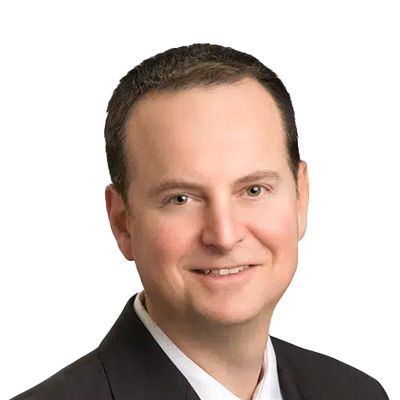
Dr. Guy Waizel
Tech Evangelist, Cato Networks
Dr. Guy Waizel is a Tech Evangelist at Cato Networks and member of Cato CTRL. As part of his role, Guy collaborates closely with Cato's researchers, developers, and tech teams to bridge and evangelize tech by researching, writing, presenting, and sharing key insights, innovations, and solutions with the broader tech and cybersecurity community. Prior to joining Cato in 2025, Guy led and evangelized security efforts at Commvault, advising CISOs and CIOs on the company’s entire security portfolio. Guy also worked at TrapX Security (acquired by Commvault) in various hands-on and leadership roles, including support, incident response, forensic investigations, and product development. Guy also held key roles at tech startups acquired by Philips, Stanley Healthcare, and Verint. Guy has more than 25 years of experience spanning across cybersecurity, IT, and AI. Guy is in the final stages of his PhD thesis research at Alexandru Ioan Cuza University, focused on the intersection of cloud adoption, cybersecurity, and AI. Guy holds a MBA from Netanya Academic College, a B.S. in technology management from Holon Institute of Technology, and multiple cybersecurity certifications.
talks & Q&A

Clean Energy on Legacy Foundations Why Critical Infrastructure Must Level Up!
Description
The rapid expansion of renewable energy has brought critical infrastructure online faster than its security foundations have evolved. Many solar installations still rely on operational technology built on decades old protocols that lack authentication, encryption, and clear trust boundaries. These systems were designed for reliability and availability, not for exposure to modern networks.
This talk examines how insecure design in legacy industrial protocols creates real operational risk for solar infrastructure. Using Modbus based monitoring and control devices as a case study, we show how attackers can read system state, issue control commands, and disrupt energy production without exploiting software vulnerabilities. The weakness is not a missing patch, but an architectural mismatch between old assumptions and new connectivity.
We also discuss how agentic AI and automated tooling amplify today’s risk by reducing the time, expertise, and effort needed to discover exposed operational technology (OT) systems, map their behavior, and execute repeatable manipulation at scale.We also place these risks in the context of established OT security guidance from CISA and NIST, which emphasizes fundamentals such as reducing internet exposure, securing remote access, and segmenting OT from IT environments.Infrastructure security must level up now, before outages move from theoretical scenarios to widespread and irreversible incidents.